sábado, 4 de abril de 2015

Bioeconomy Project for Smart Villlage Agroenergy Grid


What is the Smart  Bioeconomy initiative?  


Our  bio economy  project for Smart  Agro energy  Villages access to sustainable energy services acts as a catalyst for development – enabling the provision of good education and healthcare, access to clean water, sanitation and nutrition, the growth of productive enterprises to boost incomes, and enhanced security, gender equality and democratic engagement. as well as sustainable local economy based on local resource 

This  Project  Challenge

Unfortunately it is a fact that , in the world today, 1.3 billion people remain without access to electricity. In addition, 3 billion are still cooking on dangerous and inefficient stoves. Many of them live in remote rural village communities. Until such communities have access to modern energy services, little progress can be made to develop their economies and improve their lives.
Solar Pannel hut-3


The  concept originl  in  above figure  has  source http://e4sv.org/wp-content/uploads/2013/11/Solar-Pannel-hut-3.jpg )as inspiration  to our wrk 


The Bioeconomy  project for Smart  Agro energy Villages Programme

In each of the four  regions a major international  on line  web based workshop and web seminar  brings together the diverse set of players from across the region, providing an open and stimulating environment conducive to generating new insights into how to tackle the challenges of village energy access for development. Follow-up activities include briefing meetings for policy makers, innovation competitions to generate new ideas, training courses and further workshops. A final event in each region draws together lessons learned in conjunction with policy makers, donors and development agencies, and considers next steps. Crosscutting activities are developing supporting materials and ensuring that lessons are learned, and connections made, across the regions.
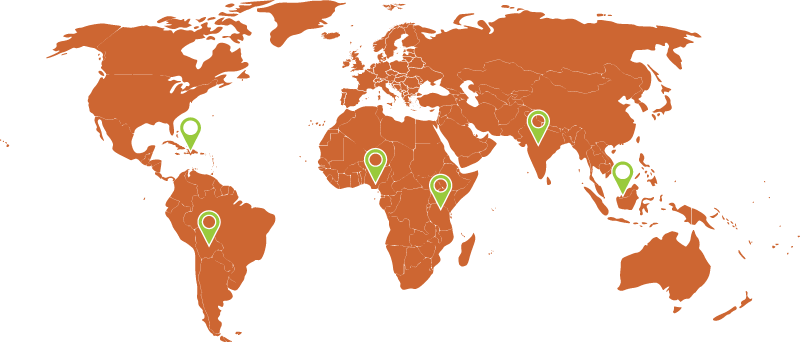
Workshop-locations
The provisional schedule of regional engagements is as follows:
  • Africa: June 2015 to September 2016
  • South Asia contact: January to December 2015
  • South America: February to December 2016
  • Central America and Caribbean: November 2016 to March 2017.
Two final workshops – provisionally in Brazil  and  India  f other global institutions – will draw together lessons learned from the project as a whole.

Our project  goal 


Our goals


The Smart  project Villages Initiative aims to provide  politios ,policy makers, donors and development agencies concerned with rural energy access with new insights on the real barriers to energy access in villages in developing countries – technological, financial, social and political – and how they can be overcome. We have chosen to focus on remote off-grid villages  based on waste resources , where local solutions (home- or institution-based systems, and mini-grids) are both more realistic and cheaper than national grid extension.

Our Approach

Over one year period commencing in 2014, we are holding workshops and follow-up engagement activities in  four regions (Africa, South and Southeast Asia, and South America). These activities bring together the diverse set of players – scientists and engineers, entrepreneurs, villagers and civil society organisations, NGO’s, financiers, policy makers and regulators – who are actively involved in addressing the challenges of village energy for development. based enginerrs with border  voluentery work with NGO

Key Intended Outcomes

The Smart Villages Initiative will provide policy makers unique insights on how to:
  • Create the framework conditions necessary for entrepreneurs to meet the off-grid energy challenge.
  • Ensure that government and donor funding achieve maximum leverage of private sector investment.
  • Integrate energy access with other development initiatives.
  • Take a community level approach, to maximise social benefit and development impact.
  • Catalyse rapid progression through the various levels of energy access.
It is our aim that overall these outcomes will result in better informed policies and more effective initiatives at national, regional and global levels to progress village energy for development, and to support the achievement of the UN’s goal of sustainable energy for all by 2030.
    Events 
videos 

orkshop Eng without borders
Panruti Pagandai Workshop
https://www.youtube.com/results?search_query=panruti+workshop


Pagandai V Pannir Selvam

Shared privately  -  Feb 2, 2015
https://plus.google.com/+PagandaiVaithianathanPannirSelvam/posts/3zD3aVTxFxg


Pagandai V Pannir Selvam

Shared privately  -  Feb 2, 2015
http://youtu.be/ZLwLDpOgpZE
recent  network school   of biomass  meetings
learning on line via network meeting

NET WORK SCHOOL 4 ECOBUSINESS ,AGRO ENERGY ,BIO ECONOMY
For more details 


segunda-feira, 3 de novembro de 2014

Integrating Biogas, Confined Feedlot Operations and Ethanol Production

Integrating Biogas, Confined Feedlot Operations and Ethanol Production

digestion anaericos   copy right original

Integrating Biogas, Confined Feedlot Operations and Ethanol Production


Alberta has many agricultural operations, and all of them generate various types of organic wastes. These organic wastes require proper handling to reduce pollution and contamination. Using anaerobic digesters to process these organic wastes appears to be an attractive option since the anaerobic digestion process can stabilize biologically active organic wastes and produce biogas.

Biogas may also be called renewable natural gas because biogas can be used as a fuel source to produce electricity and heat like natural gas. Given the number of clusters of agricultural operations in Alberta, there may be a potential to integrate biogas plants with other operations.

This factsheet explores an integrated system consisting of an ethanol manufacturing facility, a confined feedlot operation (CFO) and a biogas plant. It is well known that the demand for ethanol-blended fuels is growing since replacing fossil fuel usage with renewable fuel remains a top environmental challenge.

At least two integrated systems similar to the above-mentioned concept have either been built or are being built in North America. Therefore, the following sections briefly describe these integrated systems with flow diagrams including the energy requirement (biogas volume) and a hypothetical calculation.

Anaerobic Digestion

At least five anaerobic digesters are in use for processing agricultural wastes in Alberta. Anaerobic digestion is a naturally occurring process through which organic matter such as manure, feed spills, meat processing wastes and crop residues are stabilized by micro-organisms strictly in the absence of air. During this process, some organic compounds are converted to methane (CH4) and carbon dioxide (CO2) gases. This mixture of gases is known as biogas. The composition of biogas is 50 to 75 per cent CH4 and 25 to 45 per cent CO2.

Like natural gas, biogas can also be used as a fuel in power generators, engines, boilers and burners. In practice, specially designed and insulated tanks are used to facilitate the anaerobic digestion process under a controlled atmosphere. These tanks are known as anaerobic digesters.

The effluent coming out of the digester after the completion of this process is known as digestate. Digestate has nutrient value and can be applied to the land like manure. Digestate also has much less odour compared to stored manure.

Ethanol Production

In North America, most commercial ethanol is produced by fermenting starch containing grain such as wheat, barley and corn. However, wheat and triticale have the best potential for producing ethanol in Alberta. A mass flow diagram of this process is shown in Figure 1. Since wheat and triticale have almost the same ethanol yield, their production requirements are assumed to be the same in this factsheet.

Figure 1. Ethanol production from wheat/triticale.

Figure 1. Ethanol production from wheat/triticale.

Actual ethanol production has three steps:


  • feed preparation
  • fermentation
  • distillation
In the feed preparation step, the feedstock is subjected to grinding, the addition of water, heating and the addition of enzymes to hydrolyse the starch. The product that comes out of this step is known as mash.

The next step is fermentation. During the fermentation process, enzymes break down protein and starch into sugar and then yeasts, single celled living organisms that convert most of the sugar compounds into ethanol and CO2. The fermentation process releases a considerable amount of CO2. The fermented liquor containing alcohol is known as beer. Beer has an ethanol concentration of between 9 to 14 per cent.

As ethanol has a lower boiling point than beer, ethanol is separated using the distillation step. The separated ethanol mixture is 95 per cent ethanol and 5 per cent water. This 95 per cent ethanol is then dehydrated to 99.7 per cent ethanol and denatured by adding 2 to 5 per cent gasoline. The beer coming out after the distillation step is known as whole stillage or distiller’s grain.

Confined Feeding Operations (CFOs)

There are 34,625 cattle ranching and farming operators and 5.7 million cattle in Alberta. This large number of CFOs produces a large quantity of manure, which is a cause for concern and often limits opportunities to expand an operation. Large CFOs are good candidates for integrated opportunities as they require a considerable quantity of grains and roughages, and distiller’s grain can replace some of this feed requirement.

Rationale for the Integrated System

Anaerobic digesters can process a large quantity of manure from CFOs and produce biogas, which is a renewable energy source. Ethanol plants are often located near agricultural operations as the feedstock for ethanol production is mostly from grains such as corn, wheat and barley. Energy intensive ethanol production could use biogas “renewable energy” to meet its energy demand if the ethanol and biogas plants were located close to each other.

Ethanol production produces a large amount of whole stillage as a by-product, which has dry matter to 12 to 14 per cent. Centrifuging the stillage can concentrate the solids to 30 to 35 per cent dry matter to produce wet distiller’s grain. These wet solids are a valuable source of protein for cattle and can replace about 20 to 40 per cent of the cattle’s feed intake.

The remaining liquor after centrifuging is known as thin stillage. Thin stillage may have up to 7 per cent organic matter in the form of suspended and dissolved solids and can be fed to anaerobic digesters to enhance biogas production. The wet distiller grain has a shorter shelf life. Drying this material will be expensive. Alternatively, it may be fed to cattle in nearby feedlots without drying.

Ethanol blended with gasoline is sold as fuel for automobiles to reduce emissions and fossil fuel consumption. The ethanol manufacturing process also releases CO2, which can be trapped and sold to other industries. A schematic diagram of the components of a similar integrated system is shown in Figure 2.

Figure 2. Schematic diagram of an integrated system consisting of an ethanol plant, CFO, grain farm and biogas plant.

Figure 2. Schematic diagram of an integrated system consisting of an ethanol plant, CFO, grain farm and biogas plant.

The following equations are necessary in determining the feasibility of this integrated system.

Confined feeding operation
1 beef animal =
8.8 tonnes of manure (8 - 12 per cent solids)/year
1 dairy animal =
22.6 tonnes of manure (12 per cent solids)/year
Grain feed requirement for beef cattle =
0.90 tonne/animal/year
Grain feed requirement for dairy cattle =
2.05 tonne/animal/year
.
Biogas plant
1 tonne of beef manure (8 - 12 per cent solids) =
46 m3 of biogas + digestate for land application
1 tonne of dairy manure (12 per cent solids) =
32 m3 of biogas + digestate for land application
1 tonne thin stillage (7 percent organic content) =
48 m3 of biogas + digestate for land application
1 m3 of biogas =
20 MJ or 1.7 kWh and 7.7 MJ when used as fuel in a co-generator

Example calculation
Determining the quantity of wheat, energy and feedstock material for a biogas plant to produce 25 million litres of ethanol in a year:

a. Grain requirement
Ethanol yield from 1 tonne of wheat = 366 L of ethanol
Quantity of wheat required to produce 25 million litres of ethanol = 25,000,000/366
      = 68,306 tonne
b. Biogas needed
Amount of biogas needed to process 68,306 tonne of wheat = 68,306 x 237 m3
      = 16,188,525 m3
c. Distiller grain produced
The amount of whole stillage produced = 68,306 x 0.43
      = 29,372 tonne (dry)
d. Biogas potential of thin stillage
25 per cent of the whole stillage is thin stillage
The quantity of dry thin stillage = 29,372 x 0.25
      = 7,343 tonne (dry)
Thin stillage may contain up to 7 per cent solids
Quantity of thin stillage liquor = 7,343/0.07
      = 104,899 tonne
The biogas potential of the fermented thin stillage liquor is = 104,899 x 48
      = 5,035,129 m3
e. Size of the feedlot
The balance biogas quantity required from cattle manure is
      = 16,188,525 - 5,035,129
      = 11,153,396 m3
Size of the feedlot = 11,153,396/46/8.8
      = 27,673 head operation
Note:
  1. Density of ethanol is 790 kg/m3.
  2. Up to 25 per cent of the total distiller’s grain (whole stillage) is thin stillage, and thin stillage usually has up to 7 per cent solids.
  3. 20 to 40 percent of the total cattle feed requirement may be replaced with the distiller’s grain.
  4. Plant material may be used to maximize the biogas production like the addition of thin stillage in the anaerobic digesters.
f. Cattle feed replacement and excess distiller’s grain for selling
Amount of distiller grain available as cattle feed
      = 29,372 – 7,343
      = 22,029 tonne
Beef grain requirement = 897 kg /beef
Grain feed requirement for 27,673 beef cattle
      = 27,673 x 0.897
      = 24,823 tonnes (dry)
Distiller grain can replace at least 20 per cent of the cattle grain feed = 24,823 x 0.2
      = 4,965 tonne (dry)
The maximum excess amount of distiller grain for selling = 22,029 - 4,965
      = 17,064 tonne (dry)
g. CO2 production
The amount of CO2 produced = 68,306 x 0.28
      = 19,126 tonne
Summary

The requirement for large quantities of grains should not be underestimated. For example, 68,300 tonnes of wheat is needed to produce 25 million litres of ethanol, which is approximately 1 per cent of the total wheat production in the province. Ethanol manufacturing produces a large amount of distiller’s grain as by-product. Finding a market for the distiller’s grain will improve the economics of ethanol production. If not, handling the excess distiller’s grain can be expensive. However, integrated systems often have the advantage of using the by-product of one operation as the feedstock for another operation.

For additional information, check the following documents:
Biogas Energy Potential in Alberta, Agdex 768-3
Biogas Distribution – Rural Utilities Division of Alberta Agriculture and Rural Development
Incentives for biogas production – Alberta Bioenergy Producer

Prepared by
Alberta Agriculture and Rural Development
Mahendran Navaratnasamy, Lawrence Papworth – Agriculture Stewardship Division
James Jones – Bio-Industrial Development

Source: Agdex 768-4. Revised October 2008.


For more information about the content of this document, contact Duke.
This information published to the web on December 1, 2007. 
Last Reviewed/Revised on October 1, 2008.

Integrating Biogas, Confined Feedlot Operations and Ethanol Production

Brazilian clean technology solar biogas integrated microalgae bioeconomy project


http://www.claeff.com.br/index.php?option=com_content&view=article&id=13&Itemid=18
origional  copy right http://www.claeff.com.br/
Solar Collectors
This process has a great synergy between its elements, respecting the environment with waste treatment and giving prime destination for each element. This is not a process improvement, but the junction of four in a single production adapted to the reality of the Northeast and has not yet been done, but that can be fully applicable to the reality of semi-arid process systems.

Production with Clean Energy

General aspects 
The PP Bio is a process that has the cultivation of microalgae as a primary product, associating several clean to form a complete system sustainable and environmentally friendly energy technologies.
Seaweed and algae are aquatic plants that live in seawater, freshwater or brackish, abundant in much of the Northeast, which perform photosynthesis and capture CO2 from the atmosphere, consuming mineral water and generating organic material. These essential oils are extracted for industries of food, drugs and cosmetics, still leaving an organic byproduct that is generated in a biogas digester, mixing of CO2 and CH4.
These gases are in trouble for the issue of global warming. However, CH4 is a fuel with high calorific value and can be applied as compressed natural gas (CNG) technology developed and used in the market.
Many areas in the Northeast do not yet have distribution of CNG because of the pipe network to be extremely expensive to serve populations with low purchasing power.
Hundreds of organic wastes ranging from urban waste from agribusinesses to leaf and fruit crops rot in the environment generating primarily CO2 and CH4, villains of global warming.
It is possible to draw a parallel with cashew, which does not take advantage of the stalk that can be used for the extraction of essences and the remainder is also used in the production of biogas.
The gases generated in a digester can be separated through a scrubbing tower where the CO2 is absorbed and released CH4, which can be used in the generation of electricity by burning in a boiler or a power generator. This new CO2 is returned to create creation of microalgae, which no longer exist emission of harmful gases.
In turn, the sun may be used for heating processes of oil extraction as well as in part of desalination process water without the need for burning organic fuel production, thereby increasing the energy efficiency of the system.
Market
Many algae and microalgae oils are high price in domestic and international markets such as beta-carotene, with high antioxidant power, vitamin B-12 and many others.
The cultivation of microalgae is widely studied outside of Brazil, and there are plans to produce biodiesel oil being processed in Argentina (Patagonia), USA, Israel, Australia, and other countries.
Some Brazilian universities have conducted research in this area, but until then, there is no cultivation of industrial form in semiarid full.
Several surveys indicate that areas of twelve to fifty times smaller are necessary in the cultivation of microalgae for the production of oil, compared to production of castor.Only your initial investment is higher, considering the preparation of breeding. However, when considering carbon sequestration, the process becomes feasible.
There are hundreds of microalgae can be grown in abundant brackish waters of the backwoods of each species and different ingredients are extracted with high added value.
Some are made of up to 80% of their body weight in oil, if the market fails to have high value, fit to be inserted in the biodiesel production chain, where we developed a species adapted to the region and the extraction process suitable for the same .
The PP Bio aims to promote the paths to a technique that will make economically viable processes of enterprises and municipalities, pointing to a new supply chain, considering abundant supplies in the Northeast region as the land, brackish water, and sunlight. But critics point until it reaches its feasibility, are the development of species of microalgae adapted to the reality of the Northeast and the discovery of methods of bacteriological control to achieve a status of optimal growth and economic viability.
Introduction to Bio PP
Find the best species of microalgae adapted to the interior, with the greatest market viability, is one of the goals of this project.
In the production chain of cashew found a tailing almond nut used for animal feed. In this case, the supply chain could be changed for the extraction of noble oil effluents, with subsequent feeding of animals, where the excrement of them are used for digestion, generating the value chain with the extraction of oil.
Biodigestion
The digestion is a biochemical process where organic no commercial value, such as leaves, animal manure solids from wastewater treatment and agro industrial waste materials can be digested generating on average 4% of the original mass of biogas that has 60% CH4. The remainder of the original mass can be used as organic fertilizer.
Gas separation
The separation of gases is done in a tower where the biogas is introduced from the bottom and propelled into contact with the water, against the current that, under certain conditions, absorbs CO2 instead of CH4. This in turn is released from the top of the tower. The CH4 is then treated and used in compression to convey biogas (CNG) or electricity generation. The CO2 is used in solution with a nutrient cultivation of microalgae, mixing by dispersing the breeding designed for this purpose.
Cultivation of microalgae
Microalgae consume CO2, carbon source, and have an average of 22% in this composition, and for each pound of live cultivated microalgae, is absorbed approximately 0.8 kg of CO2, 0.6 kg O2 releasing to the atmosphere where 30% to 80% of the living mass becomes oils, depending on the type of algae, the active may be separated with higher added value.
To understand the numbers, it means that on a hectare of planting microalgae will have an average yield of 5.5 ton / month of dry microalgae, generating 2.5 tons of special oils considering algae with 40% oil. However, you can get up to 80%, absorbing 4.4 ton of CO2 release of 3.3 tons of oxygen to the atmosphere, which produces 3.3 tons of organic material. In the digester, if not used for animal feed, it generates 3.0 tons of organic fertilizer and 50 kg of CO2 and 80 Nm³ CH4 gas. Here we use smaller numbers, concluding that there is much room for the development of the process.
Bio PP, The Union of Processes
The focus of Bio PP is the union of systems of cultivation of microalgae, biodigester, gas separation and oil extraction system with the generation of various products adapted to the reality of semi-arid tower.
The application of this knowledge generates the operation of a new supply chain, overriding environmental, social and energy issues. Here we find the feasibility of obtaining a supply chain facing the northeastern hinterland, with the cultivation of microalgae adapted to the region. The goal is to produce useful, cosmetics, pharmaceuticals and others with the absorption of CO2 from any source to generate this gas industries of food supplies.
In this case, a digester is used in the production of biogas or CNG. The source of the organic material may be multiple, including stems and leaves of the castor bean plant, enabling the production cost of biodiesel through these sources. Waste of food or leftover treated wastewater industry are also used.
The PP Bio focuses its attention on the formation of a nursery in the city of microalgae Paudalho - PE where the research is done for ever deeper knowledge semilaboratorial scale, obtaining data for the pilot project to be developed in the backcountry.
The project is divided into two phases, the first being called incubators Microalgae, lasting eighteen months. The second phase is the implementation of the Pilot Project, which developed the solar power as an energy alternative heating in oil extraction from microalgae. See the flowchart below:
Innovation
As well as practical application of stem and leaves mamoneiro for biogas generation and utilization of CO2 from various sources for growing algae and microalgae, are unknown does not exist in Brazil the cultivation of microalgae for biodiesel with dissolution CO2, which prevents the increase in growth rate thereof.
Another process that is not known is the pilot-scale extraction of essential oils from algae or reject the use of microalgae after extraction of active elements in the generation of biogas digesters on or use of this waste in animal husbandry, with their feces being used to generate environmentally friendly fuel.
The environments used as the waters of brackish lagoons do not have commercial use in a wide area of ​​territory. Even if it is executed in artificial ponds, the use of land will be dry regions and low value.
The Bio PP has a great synergy between its elements, respecting the environment with waste treatment and giving prime destination for each element.
This is not a process improvement, but the junction of four in a single production adapted to the reality of the Northeast and has not yet been done, but that can be fully applicable to the reality of semi-arid process systems.
If we join cane bagasse as raw material, waste or even cashew plantation of castor, where the stems and leaves are completely neglected, can be removed much more energy, enabling economically biodiesel from castor, which today is only feasible with strong fiscal incentive.
The inputs in this production cycle are the sun, the water not used for inactive wells and organic waste coming from agribusiness and urban waste. These items generate useful products to solve the problem of energy, global warming and food.
New forms of carbon sequestration are also global and emerging needs of the First World, eager for consistent and feasible projects.
Using a land of semiarid Northeast, will be deployed a Research and Development with the construction of a pilot plant, uniting all processes: the cultivation of microalgae, digestion, separation of gases, electric generators small through the wind process, vegetable oil extraction from algae, organic from agribusiness, agricultural and urban wastes, biogas purification unit and extracts generated on current technology.      
Advantages
Among the many advantages of Bio PP, we can highlight: 
- the use of dry lands and brackish water of the northeastern semi-arid region for the production of inputs; 
- the double carbon sequestration in the cultivation of microalgae fermentation process and biogas; 
- the production of carrier gas, without impact on global warming, 
- generating inputs food, cosmetic and suitable for the transesterification process of generating biodiesel oils, depending upon the kind of microalgae to be cultured; 
- the use of agro-industrial wastes Northeast as the cashew nut, castor bean, leather and footwear industry and slaughterhouses, which could be handled in useful elements for agriculture.
Final Thoughts
The project unites Bio PP and other processes known in development as the cultivation of microalgae, adding greater value than the separate processes, creating multiple sources of income and enabling the whole production chain. 
With the support of FINEP, the FACEPE and other companies, the PP Bio is an alternative to the Northeast, with the possibility of new ways to north-eastern man, adding environmental solutions that will certainly overcome the problem of degradation by generating Power and useful inputs.
If the PP Bio is applied intensively, may contribute as a new energy model for Brazil and other regions of the world.

Extant requerida: PI 0704811-0 of 11/06/2007.